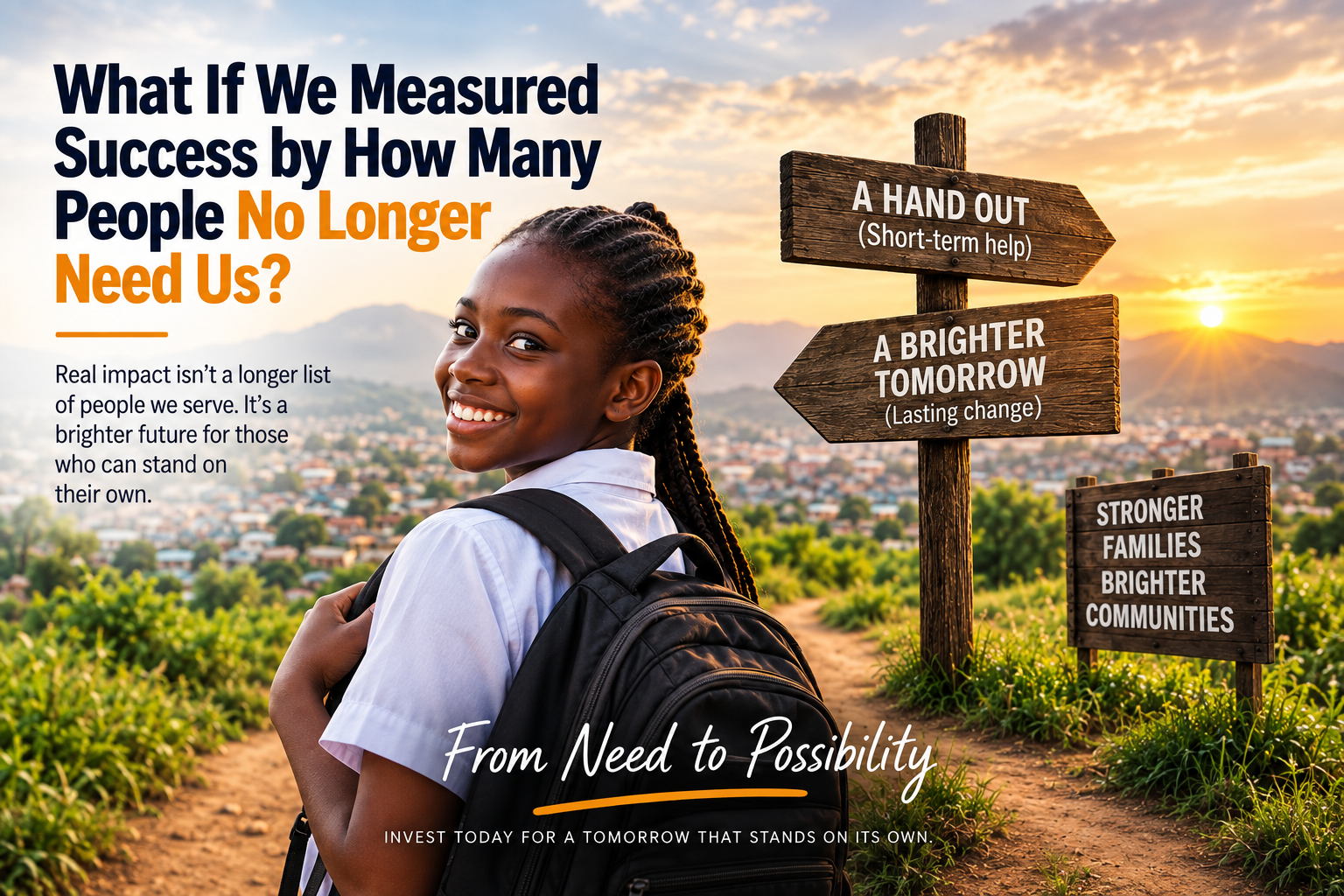
Mentoring Empowers Lives
Anonymous /

Most organizations have a website. Far fewer control one. The difference shows up the day you need to post an urgent appeal, fix a broken donate button, or launch a new program page, and the only person who can do it is a contractor who answers email on Thursdays.
Knowing how to build a website, and understanding a content management system (CMS) like Drupal, closes that gap. It is not about becoming a full-time developer. It is about owning the most public, most permanent expression of your mission.
After more than 28 years in technology, and years of running Develop Africa's own site, I have come to see web literacy less as a technical skill and more as a leadership one. Here is why.
When you can build and edit your own pages, the time from "we should say something" to "it's live" drops from weeks to minutes. That speed matters most when it counts: a crisis appeal, a matching-gift deadline, a news story you want to ride.
Independence also changes how you think. Leaders who depend on someone else to publish tend to batch their communication into rare, oversized updates. Leaders who can publish themselves test small ideas, measure what works, and adjust. The website stops being a brochure and becomes a working tool.
Your domain name is the address for both your website and your email. Whoever controls it controls how the world reaches you. Yet in many organizations, nobody on staff can say who holds the registrar login, where the site is hosted, or when the domain renews.
The failure is common and painful. A domain registered years ago under a former volunteer's personal account. A developer who moved on and took the hosting credentials with them. A renewal notice sent to an inbox no one checks. When that happens, the website goes dark and email stops, often at the worst possible moment, and recovering it can take weeks.
Understanding the basics of domains, DNS, and a hosting control panel such as cPanel turns that risk into something you manage. You do not need to run servers. You need to know enough to answer four questions with confidence:
Whether you learn to manage these yourself or ensure someone accountable does, this is the cheapest insurance an organization can buy. It is also a governance issue, not just a technical one. A board that would never let a single person hold the only key to the office should not accept it for the website.
A good CMS forces you to ask structural questions. What kinds of content do we actually produce? Programs, stories, reports, events, people? What fields does each one need? How should they be categorized so a visitor, or a funder, can find them?
In Drupal, those answers become content types, fields, taxonomies, and views. That discipline transfers directly to the rest of the organization. If you can model your website cleanly, you can usually model your donor records, your program reporting, and your knowledge base too. Messy websites are often a symptom of messy internal systems, and building one well exposes the mess early.
This is the same principle behind building institutions that endure: structure outlasts individual effort.
Drag-and-drop builders are fine for a single brochure site. Drupal is built for organizations that expect to have many contributors, many content types, and real accountability. It is the platform of choice for many universities, governments, and large nonprofits for that reason.
What that means in practice:
The trade-off is a steeper learning curve. That is exactly why understanding it is an advantage: most people avoid it.
Even if you never write a line of code, understanding how websites work changes every conversation with a vendor. You can tell the difference between a two-hour fix and a two-week project. You can spot a quote padded with work you could do yourself. You can ask whether a feature needs custom development or just a configuration change.
That knowledge protects your budget and your independence. Organizations that do not understand their own site often end up locked into one developer, one hosting plan, or one proprietary theme, paying for every small change. Organizations that do understand it hire help for the hard parts and keep the routine work in-house.
Funders, partners, and donors visit your website before they reply to your email. An outdated program page, a broken link, or a 2019 annual report quietly tells them the organization may not be paying attention.
When you can maintain the site yourself, it stays current. Impact numbers get updated when they change. New partners get recognized promptly. Financial documents and governance information are easy to find, which signals transparency. Over time, a well-kept website does some of the trust-building that used to require a phone call.
There is a trap here. A founder who can build the website sometimes becomes the only person who ever touches it. That is not independence; it is a new single point of failure, just with a different name on it.
The real advantage comes from understanding the system well enough to design it so others can run it. Set up roles so staff can publish. Document how pages are built. Hire specialists for security updates, performance, and complex integrations. Your knowledge should make the organization less dependent on any one person, including you.
You do not need a computer science degree. You need a few deliberate steps:
Your website is often the first place people meet your mission and the last place they check before they give. Understanding how it works is not a technical luxury. It is part of stewarding the organization well.
Anonymous /