I didn't set out to build
a nonprofit. I set out to build
the American Dream.
Then I went home to Sierra Leone — and everything changed. That moment produced twenty years of institution-building, one published framework, and a conviction that has never wavered: systems are not the opposite of mission. They are how mission survives.
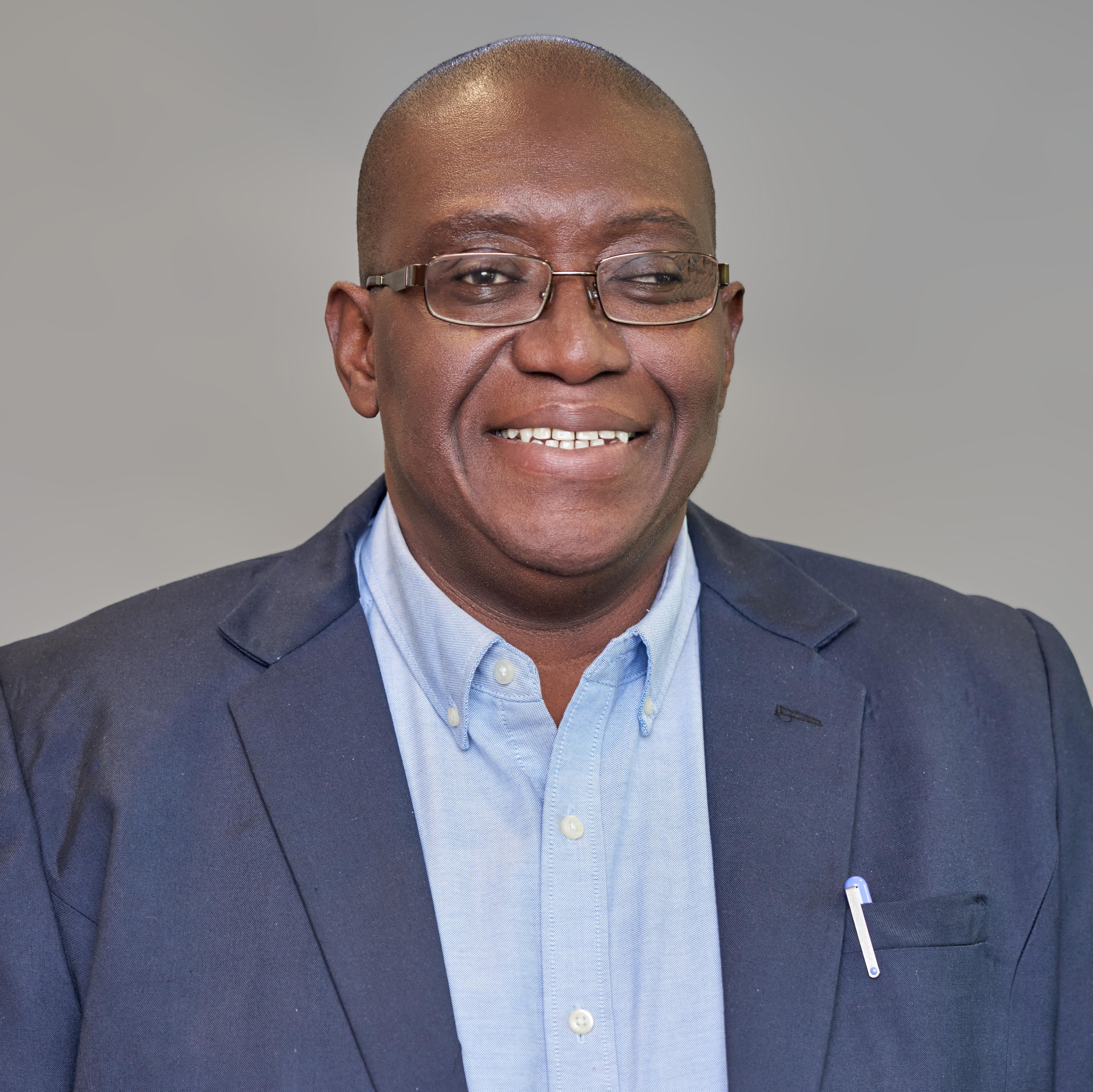
From the American Dream
to a bigger mission.
I grew up in a well-educated, middle-class family in Sierra Leone. I completed my undergraduate degree without financial worry — a privilege I understood even then. In 1995, I moved to the United States. By 1998, I had earned my MBA from Bowling Green State University and was steadily building a professional career in information systems.
I was building my version of the American Dream. And then I returned home.
I saw children begging in the streets of Freetown. Families struggling to keep their children in school. Young people forced to drop out — not because of ability, but because of circumstance. One image stayed with me: a young girl crouching on Howe Street, eye level with indifference, asking for food. I kept walking. That image never left me.
In 2006, I founded Develop Africa — officially registered as a 501(c)(3) nonprofit in Tennessee. What began as compassion became a two-decade journey of building, breaking, rebuilding, and sustaining a real institution under real conditions.
There was no blueprint. No inherited infrastructure. No shortcuts. Just a problem I couldn't ignore and the willingness to learn everything else the hard way — governance, fundraising, board management, field execution, crisis response during Ebola, and the painful discipline of knowing when to say no to a good idea that doesn't fit the mission.
Twenty years of those decisions became Mission to Systems™ — a practical operating system for nonprofit founders who are done running on passion alone and ready to build something that outlasts them. It is not borrowed theory. It is the framework that emerged from two decades of real institutional decisions — what broke, what stalled, and what actually sustains an organization through leadership transitions, funding volatility, and public scrutiny.
I lived every phase
a nonprofit founder
eventually faces.
Early wins that created momentum. Funding droughts that tested resolve. Strong partnerships — and painful missteps. Systems that broke and had to be rebuilt under pressure. Teams that thrived and seasons that stretched leadership past what felt sustainable.
What every phase taught me is the same thing: passion launches a mission. Structure sustains it. The founders who build organizations that endure are not the most passionate — they are the most disciplined about building systems while the passion is still running hot.
01
Compassion without capacity is risk
During the 2014 Ebola crisis, we launched Dream Again Home — a $30K GlobalGiving-funded response for 21 orphaned children. The lesson: good intentions at scale require structured execution or they become their own crisis.
02
Systems are not the opposite of mission
They are how mission survives. Every governance failure I've witnessed — in my own organization and others — was a systems failure dressed up as a people problem.
03
The founder is both the greatest asset and the greatest risk
The 90-Day Absence Test™ — does your organization function if you disappear for three months? — is the most honest question a founder can ask. Most cannot pass it.
04
Build machinery worthy of the heart that moved you to start
The mission deserves more than good intentions. It deserves infrastructure. Documentation. Financial controls. Board governance. The unglamorous work that makes the glamorous work possible.
I help nonprofit leaders build
organizations that outlast them.
I still lead Develop Africa — actively. Field operations in Sierra Leone, donor relationships, board governance, program design, and the daily discipline of running a 20-year institution. This is not background context. It is my current reality, and it is what makes the advisory and consulting work credible.
I don't offer theory. I bring lived operating experience from building a real institution across two continents — and the framework I developed from everything I learned doing it.
The work takes two forms. For nonprofit founders, I offer the Mission to Systems™ framework — through the book, the course, and advisory sessions — to help them build governance and institutional infrastructure that scales beyond them. For companies, foundations, and diaspora communities, I facilitate accountable, documented impact in Africa through Develop Africa's field infrastructure.
For Nonprofit Founders
Mission to Systems™ book, course, and advisory sessions — practical governance frameworks from twenty years of real institutional practice.
For Foundations
Stable, experienced implementation partnership in Sierra Leone — with full documentation, quarterly reporting, and twenty years of verified track record.
For CSR Teams
Turnkey corporate social responsibility projects in Africa — concept to completion, with press-ready media and M&E reporting.
For Diaspora Communities
Family legacy and memorial projects in Sierra Leone — scholarship funds, classroom naming, and annual impact documentation.
I act as a strategic bridge.
Between vision and execution. Between donors and communities. Between good intentions and accountable outcomes. That is the work — and it has been the work for twenty years.
- Strengthening nonprofit governance and board accountability
- Launching CSR initiatives that hold up under scrutiny
- Funding scholarships and digital training programs in Sierra Leone
- Exploring cross-border partnerships with verifiable impact
- Building organizations that survive their founders
A life lived across
multiple continents and cultures.
Beyond Sierra Leone and the United States, Sylvester has lived and worked across West Africa, East Africa, and Europe — giving him a genuine cross-cultural perspective that shapes both his nonprofit work and his advisory practice.
🇳🇬
Nigeria
Ibadan · 2 years (1971–1973)
🇰🇪
Kenya
2 years (1973–1975)
🇹🇬
Togo
Lomé · 7 months · Village du Bénin
🇫🇷
France
Aix-en-Provence & Dijon · French immersion program
🇸🇱
Sierra Leone
Freetown · Home country · Active field operations
🇺🇸
United States
Tennessee · Home base since 1995 · DA headquarters
Semi-fluent in French. This international exposure has given Sylvester a genuine appreciation for cross-cultural complexity — and a credibility with field partners, diaspora communities, and international funders that comes from having lived across the contexts he now works in.
Academic foundation for
a practitioner's career.
Graduate Degree
Master of Business Administration
Information Systems · Bowling Green State University
Bowling Green, Ohio · 1998
Undergraduate Degree
Bachelor of Arts (Hons)
French & English · Fourah Bay College, University of Sierra Leone
Freetown, Sierra Leone · 1988
If you're serious about building
something that lasts —
You don't have to start from zero. Whether you need governance clarity, a trusted Africa implementation partner, or a second set of eyes on a high-stakes decision — let's talk.
Verified by